
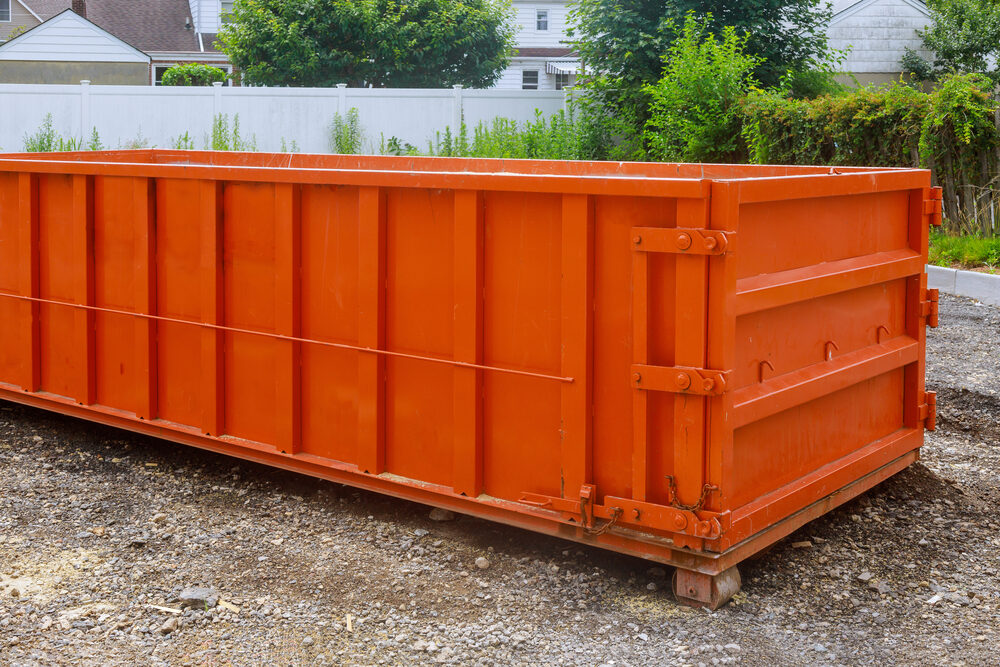
A 10-yard dumpster holds roughly four pickup truck loads of debris, a 20-yard holds about eight, and a 30-yard holds twelve to fourteen. That single comparison solves most of the guesswork behind a home cleanout, and it is the first question our team answers for anyone booking a dumpster rental in Lincolnton, NC. The harder part is matching those numbers to the actual junk sitting in a garage, basement, or driveway.
Yardage refers to volume, not weight or footprint, which is why two containers with the same length can hold very different amounts. Getting the estimate close on the first try avoids both the cost of unused space and the safety problem of an overloaded container.
What One Cubic Yard Actually Looks Like
One cubic yard is a cube measuring three feet on every side, or 27 cubic feet of space. Visualized another way, it is about the volume of a standard household washing machine, or roughly nine to ten full 13-gallon kitchen trash bags.
Multiply that mental picture by ten, and you have the smallest common roll-off container. Most homeowners underestimate because debris piles look smaller when spread across a floor than when stacked into a box with vertical walls.
Dumpster Sizes Translated Into Pickup Truck Loads
Standard roll-off containers share the same general footprint but differ in wall height, which changes capacity dramatically. A typical full-size pickup bed holds about 2 to 2.5 cubic yards when loaded level with the rails.
- 10-yard (about 12 ft x 8 ft x 3.5 ft): roughly 4 pickup loads, 90 to 100 trash bags, or a single-car garage cleared of boxes and old furniture.
- 15-yard (about 16 ft x 8 ft x 4 ft): roughly 6 pickup loads, good for a finished basement declutter or the carpet and padding from three or four bedrooms.
- 20-yard (about 22 ft x 8 ft x 4.5 ft): roughly 8 pickup loads, the most requested residential size, covering deck teardowns, large estate cleanouts, and mid-size remodels.
- 30-yard (about 22 ft x 8 ft x 6 ft): roughly 12 to 14 pickup loads, sized for whole-home cleanouts, additions, and multi-room demolition.
- 40-yard (about 22 ft x 8 ft x 8 ft): roughly 16 pickup loads, almost always commercial or new-construction work rather than household projects.
Note that the jump from a 20-yard to a 30-yard usually adds height rather than length, so driveway space stays about the same. That detail matters on the narrower lots common in older Lincolnton neighborhoods near the 28092 area.
Sizing By Project: Garages, Basements and Roofs
Project type predicts volume better than square footage does, because density varies so much between household clutter and building materials. These ranges reflect what most residential jobs actually generate.
- Single-car garage or storage shed cleanout: 10 yards. Boxes, bikes, holiday decorations, and a few pieces of furniture rarely exceed that.
- Two-car garage plus attic: 15 to 20 yards, especially once bulky items like mattresses and exercise equipment enter the mix.
- Basement declutter with furniture: 15 yards for one level, 20 yards if you are also removing carpet, shelving or paneling.
- Asphalt shingle roof replacement: 10 yards handles about 15 to 20 squares of single-layer tear-off; a second layer or a larger roof pushes you to 20 yards.
- Kitchen or bathroom remodel: 20 yards covers cabinets, countertops, fixtures, drywall, and flooring for a standard-size room.
- Full estate or hoarding cleanout: 30 yards, or two staged 20-yard swaps if driveway access is tight.
- Yard waste, brush and storm limbs: 15 to 20 yards, since branches trap air and consume space faster than their weight suggests.
Weight Limits Catch People More Often Than Volume
Every container carries a tonnage allowance in addition to its volume, typically 2 to 3 tons for a 10-yard and 4 to 5 tons for a 30-yard. Exceeding that allowance triggers overage charges billed per ton, and it can make a container unsafe to lift onto the truck.
Dense materials reach the weight cap long before they fill the box. Roofing shingles run about 250 to 400 pounds per 100 square feet, and concrete, brick, dirt, and tile weigh far more per cubic yard than household goods.
For that reason, heavy debris usually belongs in a smaller container filled partway rather than a large one filled to the rim. The U.S. EPA reports that construction and demolition debris accounts for more than 600 million tons of material generated annually in the United States, much of it dense masonry and concrete.
Measuring Your Own Debris Pile in Five Minutes
If your project does not match a standard category, measure instead of guessing. Stack or group the debris, then take rough length, width, and height in feet.
- Multiply length x width x height to get cubic feet.
- Divide that number by 27 to convert to cubic yards.
- Add 20 to 30 percent, since irregular items never pack tightly and projects almost always uncover extra material.
A pile measuring 10 feet long, 6 feet wide, and 4 feet tall equals 240 cubic feet, or about 9 cubic yards. With the buffer applied, a 15-yard container becomes the safer booking.
Signs You Should Size Up One Step
The cost difference between adjacent sizes is usually modest compared with the price of a second haul or a swap-out mid-project. Consider moving up a size when any of these apply.
- You are clearing more than two rooms or an entire level of the home.
- The job includes bulky items such as sectional sofas, box springs, appliances or above-ground pool liners.
- Demolition is involved, since drywall, lath, and framing expand once broken apart.
- Multiple household members or a contractor crew will be loading, which tends to accelerate volume.
- The rental window is short, and there is no time to schedule an exchange.
Overfilling is the one mistake with no cheap fix. Debris must sit level with the top rail, because North Carolina hauling rules and federal cargo securement rules require loads to be fully covered and contained in transit.
Driveway Space and Access in Lincolnton and Statesville
Before confirming a size, walk the delivery path. A roll-off truck needs about 60 feet of straight clearance to set a container down and roughly 23 feet of vertical space, which rules out low branches and carport overhangs
.
Homeowners arranging a dumpster rental in Statesville, NC often deal with mature tree canopy in the older streets near downtown and the 28677 corridor, while newer subdivisions off I-40 and I-77 usually have wide driveways that accommodate a 30-yard without trouble. Plywood placed under the wheels protects asphalt during warm months.
If street placement is the only option, check with the city first, since right-of-way permits carry expiration dates and specific marking requirements.
Frequently Asked Questions
How Many Trash Bags Fit in a 10-Yard Dumpster?
A 10-yard dumpster holds approximately 90 to 100 standard 13-gallon trash bags, or about 50 to 60 of the larger 30-gallon contractor bags. Loose furniture reduces that count considerably, since irregular shapes leave air pockets that bags would otherwise fill.
What Size Dumpster Do I Need for a Single-Layer Roof Tear-Off?
A 10-yard container handles roughly 15 to 20 squares of single-layer asphalt shingles, which covers most homes between 1,500 and 2,000 square feet. Two existing layers roughly double the weight, so a 20-yard with a higher tonnage allowance becomes the better choice.
Is It Cheaper to Rent One Large Dumpster or Two Small Ones?
One appropriately sized container is almost always cheaper, because each delivery and haul includes its own transport and disposal trip. The price gap between a 20-yard and a 30-yard is typically 15 to 25 percent, while a second small rental effectively doubles the base cost.
How Long Can I Keep a Residential Dumpster?
Standard residential rental periods run 7 to 14 days, with shorter weekend windows and extended monthly terms available for renovation work. Weather delays are common in the Carolina spring, so notify your provider early rather than after the pickup date passes.
What Cannot Go in a Residential Dumpster?
Paint, solvents, motor oil, batteries, tires, propane tanks, refrigerants, and asbestos are prohibited in roll-off containers statewide. Lincoln and Iredell County convenience centers accept many of these items separately, usually at no charge for households.
Get a Size Recommendation Before You Book
Describe the project, the rooms involved, and the heaviest materials on the list, and our team at Holmes Disposal Inc. will name the container size that fits, along with the tonnage allowance that goes with it. Contact Holmes Disposal Inc. to request a quote, locking in a delivery window for your cleanout.


